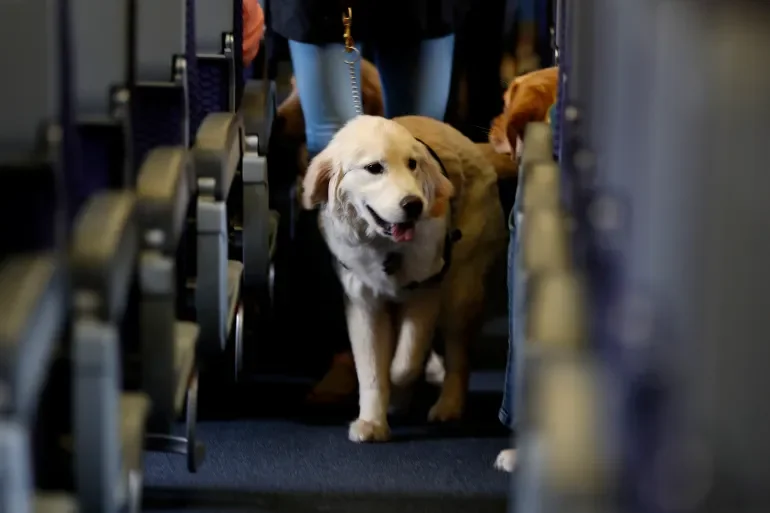
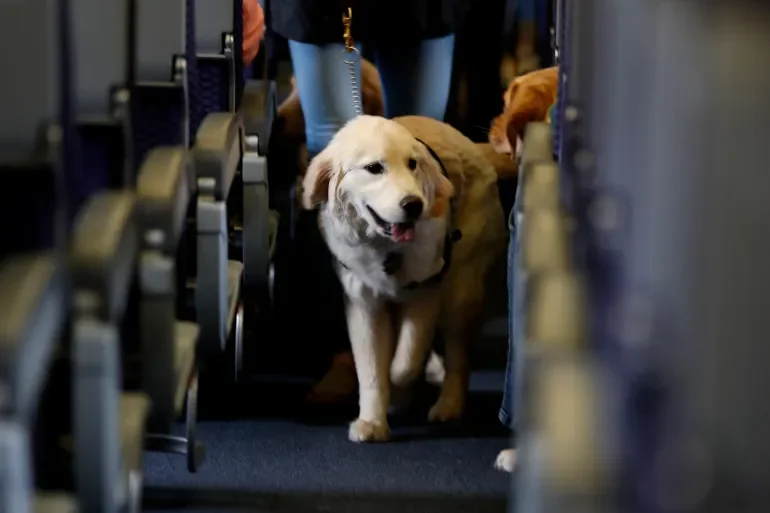
Emotional support animals, also called ESAs, provide comfort to people dealing with anxiety, depression, PTSD, and other mental health conditions. Many travelers used to bring their emotional support animal on a plane for free. However, emotional support animal airline rules have changed in recent years. If you plan to travel with your ESA, it is important to understand the current policies before booking your flight.
Are Emotional Support Animals Still Allowed on Airlines?
Under updated rules from the U.S. Department of Transportation, airlines are no longer required to treat emotional support animals as service animals. This means most airlines now classify emotional support animals as regular pets.
In the past, passengers could present a letter from a licensed mental health professional and bring their ESA into the cabin without paying a pet fee. Today, that is no longer the case for most U.S. airlines. Emotional support animals must follow the same rules as other pets traveling on a plane.
Because of this change, travelers should not assume their ESA can fly for free or sit outside a carrier.
Emotional Support Animal Airline Rules in the United States
Most major airlines in the United States now follow similar policies. Emotional support animals are treated as pets, and standard pet travel rules apply.
Your emotional support animal usually must:
Fit inside an airline approved carrier
Stay under the seat in front of you
Meet weight and size limits
Be clean, well behaved, and not aggressive
Airlines also charge a pet fee, which typically ranges from 75 to 125 dollars each way. Some airlines limit how many pets can travel in the cabin on each flight. It is always best to contact the airline before booking your ticket.
Difference Between Emotional Support Animals and Service Animals
It is important to understand the difference between an emotional support animal and a trained service animal.
A service animal is specially trained to perform tasks for a person with a disability. For example, a service dog may guide someone who is blind or alert someone to a medical condition. Airlines are still required to accommodate trained service animals under federal law.
Emotional support animals, on the other hand, provide comfort through their presence but are not trained to perform specific tasks. Because of this, they do not receive the same travel protections as service animals.
If your animal is a trained service dog, you may need to complete special forms provided by the airline before flying.
Documentation for Flying With an Emotional Support Animal
Even though emotional support animals are treated as pets, you may still need certain documents. Airlines often require proof of vaccinations, especially rabies shots. Some destinations also require a health certificate from a veterinarian issued within a specific time frame before travel.
If you are flying internationally, pet travel rules can be stricter. Some countries require microchips, blood tests, import permits, or even quarantine. Always check the destination country’s animal entry requirements well in advance.
Having the correct paperwork can help you avoid delays at the airport.
Tips for Traveling With Your Emotional Support Animal
Planning ahead is the key to a smooth trip. Before you travel, review the airline’s pet policy on its official website. Make sure your carrier meets the airline’s size rules. Soft sided carriers are often easier to fit under the seat.
Help your emotional support animal get comfortable with the carrier before travel day. Let your pet spend time inside it at home so the space feels familiar. On the day of travel, give your pet time to exercise before heading to the airport.
Arrive early for check in. Traveling with an animal can take extra time, especially if staff need to review your documents.
Bring essentials such as water, small treats, waste bags, and a comfort item like a favorite blanket.
Can Emotional Support Animals Fly Internationally?
Emotional support animal airline rules vary outside the United States. Many international airlines have never recognized ESAs as service animals. In most cases, they are treated strictly as pets.
If you are flying overseas, check both the airline’s pet policy and the destination country’s import rules. Some countries have strict health and vaccination requirements that must be completed weeks or even months before travel.
Proper preparation is especially important for international trips.
Conclusion
Emotional support animal airline rules have changed, and most airlines now treat emotional support animals as regular pets. This means pet fees, carrier requirements, and size limits usually apply. Only trained service animals receive special travel accommodations under federal law.
Before flying with your emotional support animal, review your airline’s pet policy, prepare the required documents, and plan ahead. With the right preparation, you and your companion can travel safely and comfortably.